You need more land? This is an increasingly relevant issue in today's world.
Below there is illustrative map of Singapore with red areas indicating current (in pink) and future (in red) land reclamation projects.
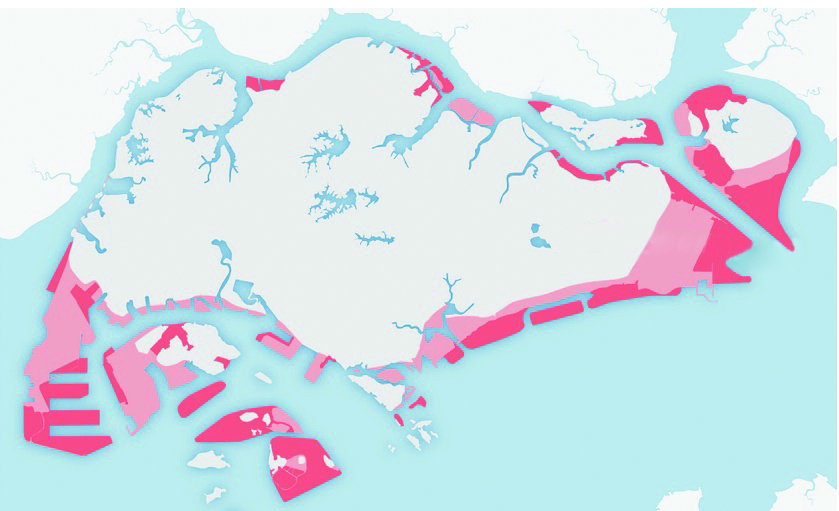
Source: https://blog.nus.edu.sg/reddotpollution/2022/02/21/not-enough-land-make-more/
One option is to get it from the sea, called "land reclamation".
In table below there are presented some countries which have been successful in reclaiming land, sometimes essential proportion of their previous territories. The full list of the countries having successfully reclaimed a land is much longer, the examples below serve as illustration.
| Country |
sq km reclaimed |
% of territory reclaimed |
| Netherlands |
7000 |
17 |
| Monaco |
0.41 |
20 |
| South Korea |
1550 |
38 |
| Singapore |
135 |
20 |
| Macao |
17 |
170 |
| Bahrein |
313 |
76 |
Source: https://en.wikipedia.org/wiki/Land_reclamation
Two processes are run in parallel fashion (a) land reclamation and (b) land protection, as shown below:
Technical chart, not containing real information.
Several methods available to reclaim land.
When it comes to land reclamation then there are several ways to get this done, some of those methods are more traditional, some are more advanced. Every unique situation could be solved in the way most suitable to specific case.
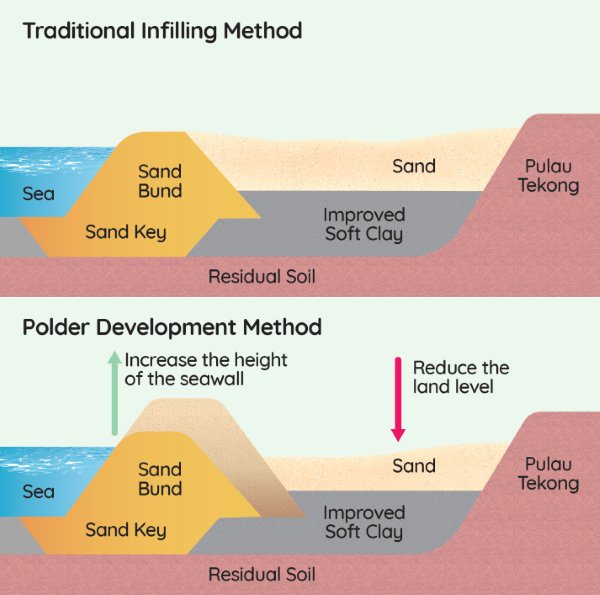
Source: https://blog.nus.edu.sg/reddotpollution/2022/02/21/not-enough-land-make-more/
Or yet another solution.
There are several scientific analyses available to describe the opportunities for land reclamation.
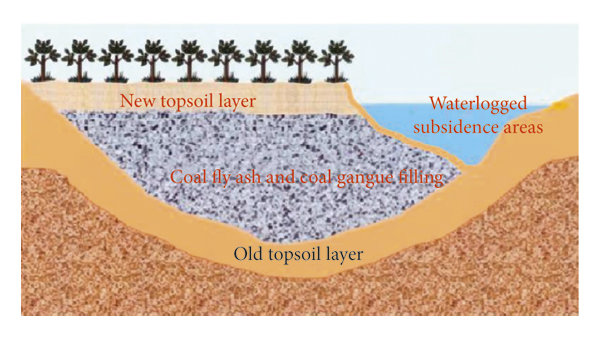
Source: https://www.researchgate.net/figure/Diagram-of-filling-the-reclamation-area-of-mining-subsidence-land_fig2_360562327
Land reclamation and land protection need to be in respective balance.
In table below there are presented some hypothetic combinations where imaginary countries have claimed the land and also applied measures to protect it. However the proportion protected is not always in optimal proportion to land reclaimed.
| Country |
sqkm reclaimed |
sqkm protected |
% protected |
Stability status |
| Country 1 |
400 |
20 |
5% |
Low |
| Country 2 |
300 |
300 |
100% |
Excellent |
| Country 3 |
860 |
100 |
12% |
Low |
| Country 4 |
1200 |
1100 |
92% |
High |
| Country 5 |
700 |
0 |
0% |
Dangerous |
| Country 6 |
720 |
360 |
50% |
Average |
| Country 7 |
750 |
600 |
80% |
High |
| Country 8 |
250 |
100 |
40% |
Average |
| Country 9 |
850 |
600 |
71% |
Average
PotentiallyWorsening
PayAttention
ChangeStrategy
|
| Country 10 |
660 |
600 |
91% |
High |
| Average |
6690 |
3780 |
57% |
Average |
Note: Table above does not take into the considration the cases where country has natural (not reclaimed) land which needs to be protected against water. The protection is considered only in respect to this land which is reclaimed from the sea (meaning the rest of the possible protection, not relevant to reclaimed land, is not taken into account).
Suitable infotechnology needs to be applied.
Below there is preliminary schematic representation how system could be designed - preliminay and needs to be further sophisticated.
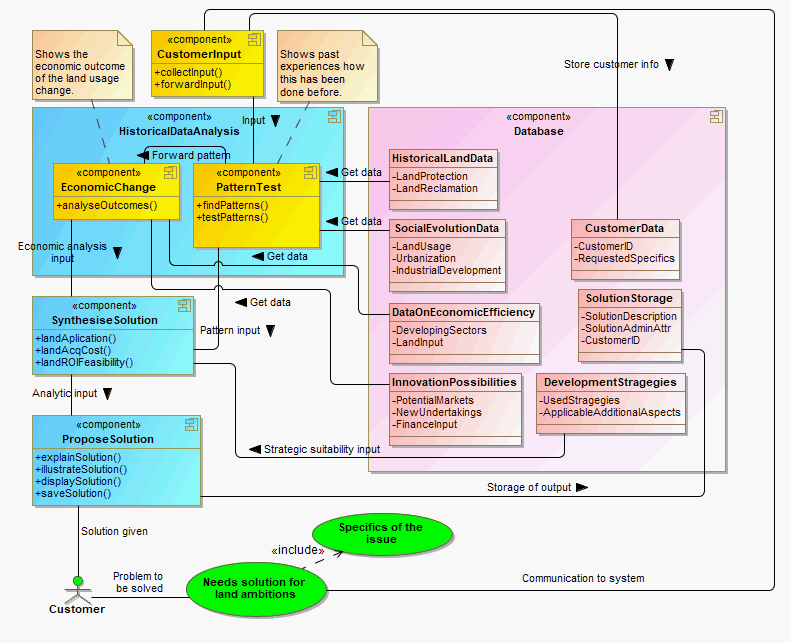
Download Central Content
Building a land
Land could be build by filling areas in sea with soil (and/or similar material) - the process called "land reclamation". Top five countries in land reclamation are China, Netherlands, South Korea, United States and Singapore.
Protect your land
To cope with raising sea levels special barriers are needed to protect land from flooding. If the land is built as the artificial land in water (result of land reclamation) it is usually not built too high above the water level (fesibility issue) and thus may be put in danger by raising sea levels. The most experienced country to cope with raising sea levels is the Netherlands - it would be useful to learn from the best.
Build your civilization
Once having a new land the respective infrastructure needs to be set to function there (depending on the purpose of the land) - supply framework, housing, emergency solutions, digital infrastructure etc., all to be settled accordingly. While having new land all infrastructure needs to be created, but the good thing is, while creating from scratch (not relying on any previous constraint) it could be most modern possible (feasibility issue) and exacty build to fullfil the function of the new land.
How technology can help?
Machine learning - ML (Artificial Intelligence - AI) tools have capabilities to combine multiple input factors and to offer complex solutions where to build land (natural conditions, water debth, streams, environmental impact, material sources, feasibility etc.), how to protect it (furhter development), how to use it (logistics, economics etc. considerations), how to communicate the project to society as well as future residents and how to secure long term development. All mentioned and many other related aspects contain huge amount of input data and AI tools could be of lot of help here.
How this goes?
Depending on particular situation there needs to be some need to create a land or to protect one. The situation needs to be analyzed including all strategic possibilities as well as tactical solution options. There are lot of specifics to build a land and to develop it furtherly which very much depend on particular situation. This is of highest importance to get the best combination of factors for the particular circumstances present.
Do you need it all?
Depending on particular situation all elements may not be needed. The land may be available, but needs protection. Also this could be the case that land needs to be built, but there is no need for highly sophisticated further development. The elements which are needed should only be used.